

What if your hotel could earn from open parking spaces without putting guest access at risk? Whether your property is in New York City, Chicago, or Austin, learning how to monetize hotel parking starts with one rule: offer outside drivers only capacity your hotel can spare. Non-guests taking spaces guests need, or staff having to answer unclear booking and arrival questions, are reasonable concerns.
Reduce that uncertainty by reserving spaces for guests and hotel operations first, setting specific availability rules, and choosing a booking process your team can manage. This guide covers how to assess capacity, compare listing and signage options, and prepare clear instructions for drivers. CurbFlip’s parking listings and scannable signs may be worth considering, but check that the current setup fits your hotel’s booking windows and access requirements. Your hotel’s policies still determine who may park and how staff handle questions.
Key Takeaways
- Learn how to monetize hotel parking by identifying surplus spaces only after setting aside capacity for guests, staff, operations, and accessibility.
- Compare staff-managed permissions, on-site instructions, and online reservations to see what each approach clarifies and what your team still needs to manage.
- Build a practical setup sequence: confirm capacity, define availability, prepare accurate listing details, and test the driver journey.
- Consider CurbFlip listings and scannable signs as tools to share instructions and support reservations, while keeping hotel access policies and guest questions under staff control.
How to Monetize Hotel Parking Without Giving Up Guest Access
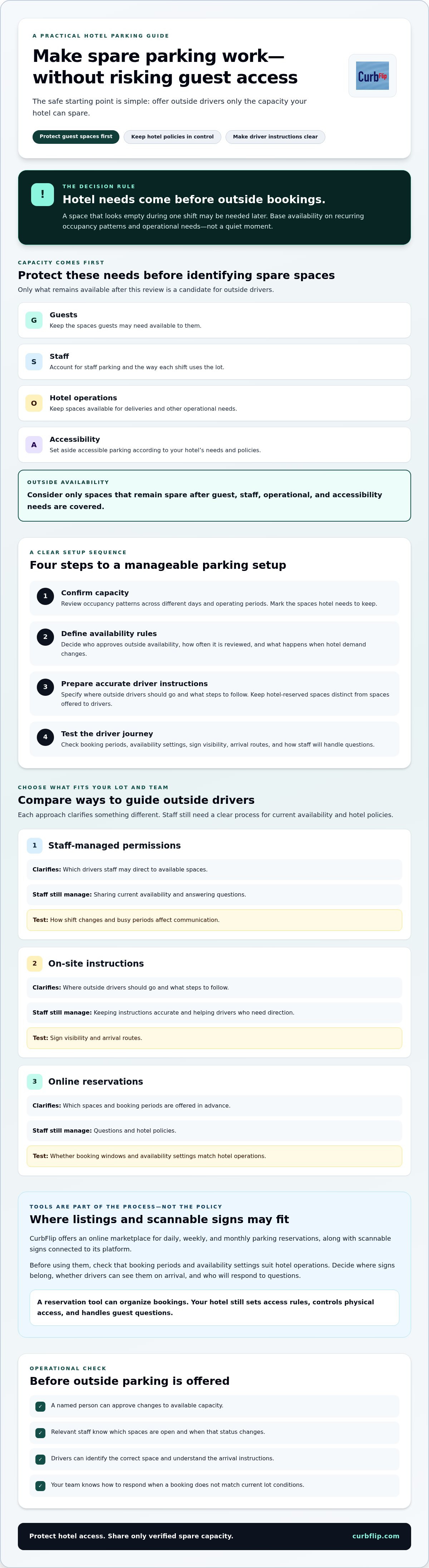
To understand how to monetize hotel parking responsibly, treat outside bookings as the last step, not the starting point. First identify which spaces are available after accounting for guests, staff, hotel operations, and accessibility needs. This applies whether your hotel is in New York, Chicago, Los Angeles, Seattle, Atlanta, San Francisco, London, Denver, Miami, Dallas, Houston, Austin, Nashville, Memphis, New Orleans, Southern California, Toronto, Montreal, or Vancouver. A space that appears empty during one shift may be needed later.
Review occupancy patterns across different days and operating periods, and note when demand tends to rise. Decide who can approve changes to outside availability and how staff will be told when a space is no longer open for booking. A reservation tool can organize bookings, but it does not set hotel policy or manage physical access. Your hotel must define who may park, where they should go, and how staff will respond to questions. Clear rules are the foundation of any access control systems approach.
For a quick look at the revenue opportunity, watch this video:
Which hotel parking spaces can you safely make available?
Base availability on recurring occupancy patterns and operational needs, not on a quiet shift or a single day. Identify which areas must remain available for guests, staff, deliveries, and accessible parking. Then decide how often someone will review the available inventory and what should happen when hotel demand changes. If your team cannot reliably update a space’s status, avoid offering it for outside bookings.
Before listing spaces, make responsibilities and communication clear:
- Identify who can approve changes to available capacity.
- Tell relevant staff which spaces are open, and when that status changes.
- Keep hotel-reserved spaces distinct from any spaces offered to outside drivers.
This separation helps you assess potential use of excess capacity without treating guest access as an afterthought.
How to Prevent Non-Guests from Using Hotel Parking: Compare Your Options
Choose an approach that fits your lot, staff workflow, and guest policies. Hotels in New York, Chicago, and other busy markets can review strategies to leverage paid parking, then compare the options against their own arrival routes and procedures. Consider what each method tells drivers and what your staff will still need to handle.
| Option | What it clarifies | What staff still manage and what to test |
|---|---|---|
| Staff-managed permissions | Which drivers staff may direct to available spaces. | Staff share current availability and answer questions. Check how shift changes and busy periods affect communication. |
| On-site instructions | Where outside drivers should go and what steps to follow. | Staff keep instructions accurate and help drivers who need direction. Check sign visibility and arrival routes. |
| Online reservations | Which spaces and booking periods are offered in advance. | Staff answer questions and follow hotel policies. Confirm that booking windows and availability settings match your operations. |
Booking details can clarify access rules, but hotel staff remain responsible for hotel policies and guest questions. Before choosing an option, consider who updates availability, how drivers find the correct space, and what staff should do if a booking does not match current lot conditions. Reservations are one part of the parking process, not a replacement for hotel procedures.
Can scannable parking signs and reservations help manage outside drivers?
Scannable signs can share parking instructions and connect drivers with a reservation process. CurbFlip offers an online marketplace for daily, weekly, and monthly parking reservations, along with scannable signs connected to its platform. Before using these tools, check that the booking periods and availability settings suit your operations. Decide where signs should go, whether drivers can see them as they arrive, and who will respond to questions. You can compare parking management options, then browse scannable parking signs as you plan.
How to Set Up Hotel Parking Listings Without Disrupting Guests
A careful setup aligns the listing with hotel operations. To understand how to monetize hotel parking without creating confusion for guests or drivers, work through these steps before making spaces available:
- 1. Confirm capacity. Recheck which spaces are genuinely available after protecting those needed for guests, staff, operations, and accessibility. Use occupancy patterns across relevant days and periods rather than a one-time count.
- 2. Define availability. Set booking periods and availability rules your team can support, including who updates them when hotel needs change. CurbFlip supports daily, weekly, and monthly reservations, but confirm that its current setup fits your hotel’s needs.
- 3. Prepare accurate listing details. Identify eligible spaces, explain where drivers should enter and park, and state any restrictions clearly. Make sure the instructions match hotel policy and are easy to follow on arrival.
- 4. Test the driver journey. Have staff follow the listing and reservation steps, locate the space, read the sign, and follow the arrival directions. Fix unclear wording or confusing directions before making spaces visible to drivers.
Hotel staff remain responsible for guest policies and access questions. A listing or sign can communicate instructions, but it does not replace your hotel’s own process. Make sure the people on each shift know which spaces are available and where to direct drivers.
What should a hotel confirm before publishing a parking space?
Check that each listed space is eligible, its booking periods match actual availability, and arrival directions are easy to follow. Confirm that restrictions are practical for drivers and supported by hotel procedures. Then have staff test the sign and reservation flow before publishing. If scannable signs fit your plan, consider where drivers need to see instructions and whether the wording matches the listing.
You can browse scannable parking signs as one option for sharing parking instructions with drivers.
Put Your Hotel’s Available Parking to Work
Knowing how to monetize hotel parking starts with protecting guest access. Confirm which spaces are genuinely available, define booking periods and arrival rules, and test the driver journey before opening a listing. Reservations can help organize bookings, but your hotel’s policies and staff remain essential to managing access.
CurbFlip supports daily, weekly, and monthly parking reservations, with scannable signs connected to its reservation platform. Check that the current setup fits your availability rules and hotel needs before you begin. Clear, consistent instructions can help both staff and visiting drivers understand where to go and what to do.
Ready to explore signage for your parking plan? Browse CurbFlip scannable parking signs and review how they could fit your hotel’s instructions and booking process. With capacity and access rules in place, you can put suitable spaces to work while keeping the guest experience front and center.
Frequently Asked Questions
How can a hotel stop non-guests from using its parking lot?
Set clear access rules and communicate them before outside parking begins. Separate guest and operational spaces from any available inventory, then use staff-managed permissions, visible on-site instructions, or reservations to explain where outside drivers may park. Booking details and signs can guide drivers, but they do not enforce hotel policy. Make sure staff know how to answer access questions and where to direct drivers.
Can hotels rent unused parking spaces to the public?
Hotels can consider offering genuinely available spaces to outside drivers, provided those spaces are not needed for guests, staff, accessibility, or hotel operations. Review occupancy patterns and busier periods before listing, and decide how availability will be updated when hotel needs change. CurbFlip supports daily, weekly, and monthly parking reservations, but hotels should confirm that its current setup fits their availability rules and booking needs.
Do QR parking signs prevent unauthorized parking?
No. A scannable sign can share parking instructions and connect drivers with a reservation process, but it does not verify every driver or control access. Your hotel still needs clear policies and a staff plan for questions. Before using signs, check their placement, wording, and booking instructions against the layout of your lot and the needs of arriving guests.
How do hotels monetize parking without affecting guests?
To learn how to monetize hotel parking without disrupting guests, first protect spaces needed for hotel use. Offer only verified excess capacity, define when it is available, and give outside drivers accurate booking and arrival instructions. Test the process with staff before publishing. Whether your hotel is in New York, Chicago, Los Angeles, or another market, guest access rules remain central.
Disclaimer
The content provided in this article is for informational purposes only. All uses of the CurbFlip name, images, logos, and likeness are the exclusive property of CurbFlip.com. This article may contain information researched by a third-party, meaning CurbFlip does not guarantee the accuracy, completeness, or reliability of any third-party information presented herein and assumes no liability for any decisions made or actions taken based on this content.