

What if your church parking lot was a source of mission funding instead of just a line item on your expense report? It's a common struggle for many congregations. You want a seamless Sunday morning experience for visitors, yet you're likely dealing with unauthorized weekday parkers and rising repair costs. It's frustrating when the lot feels crowded even when spots are open, leaving guests stressed before they even reach the sanctuary door.
You can learn how to manage church parking lot effectively by blending warm hospitality with smart, modern tools. This guide shows you how to transform your property into a self-sustaining asset that welcomes guests and pays for its own maintenance. We'll walk through the 2026 strategy for Sunday arrivals, weekday monetization through free listings, and using scannable signs to keep your lot safe, organized, and ready for your community.
Key Takeaways
- Designate guest-only zones near your main entrance and apply the 80% rule to ensure visitors always find a welcoming spot on Sunday mornings.
- Protect your property and reduce liability by following a quarterly inspection schedule that catches potholes and drainage issues before they become costly.
- Learn to manage church parking lot effectively by turning empty weekday spaces into a self-sustaining maintenance fund through modern monetization strategies.
- Deploy scannable parking signs to act as a "digital usher," allowing commuters to rent spots via scan-to-pay technology without requiring extra work from church staff.
Mastering Sunday Hospitality: Layout and Volunteer Strategy
Sunday morning is the front door of your ministry. To manage church parking lot effectively, you must see your property through the eyes of a first-time visitor. A confusing entrance or a packed lot creates immediate anxiety. You want guests to feel expected, not like they're intruding on a private club. Clear organization signals that you've prepared for them.
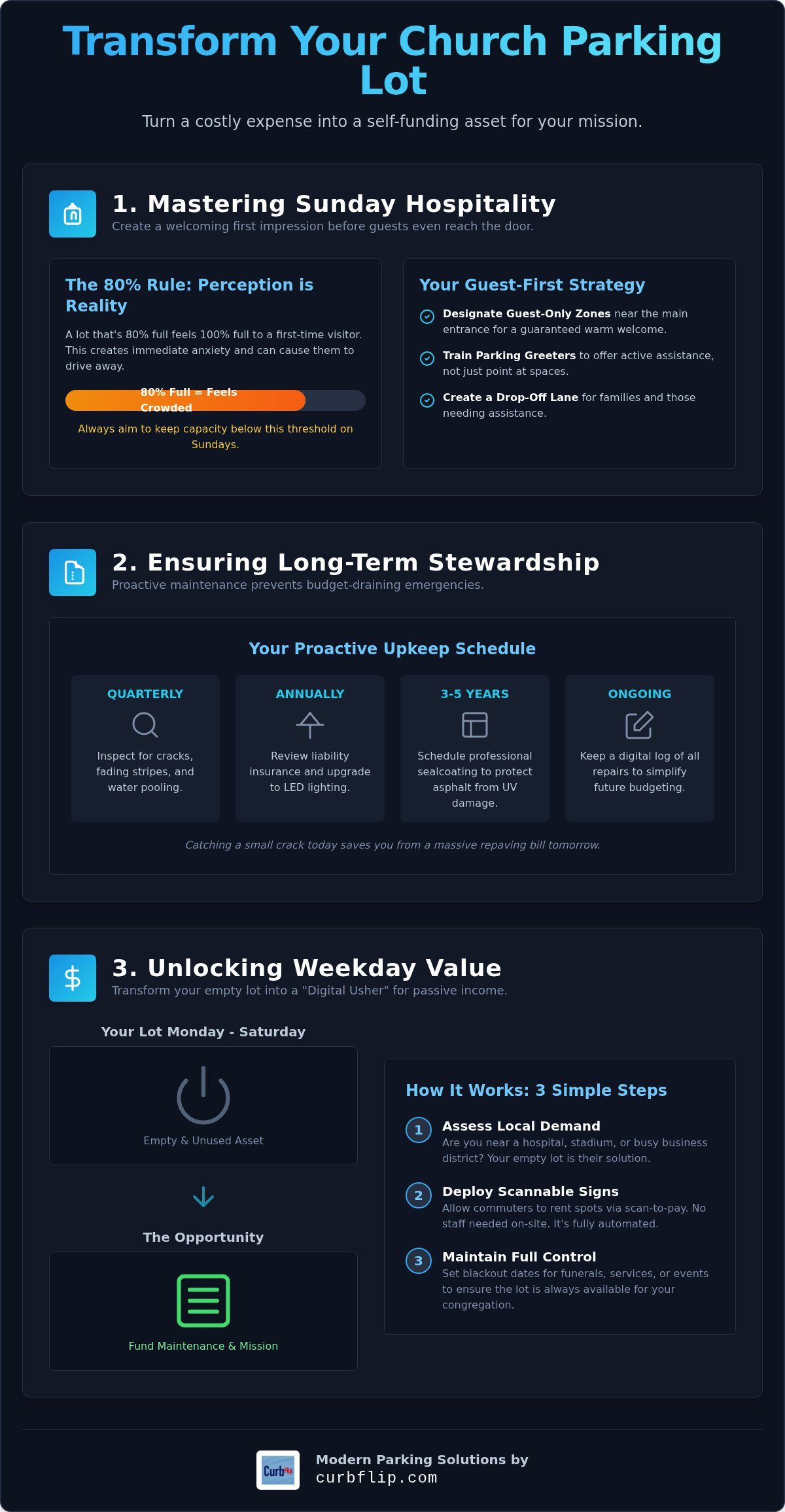
Start with the 80% Rule. When your lot is 80% full, it feels 100% full to a newcomer. They won't circle the block looking for a hidden spot; they'll likely drive away. Designate Guest-Only zones near the main entrance to ensure a warm first impression. This is a key step to manage church parking lot effectively during peak hours. Pair these spots with trained parking greeters. These volunteers are the first face of your church's hospitality team, so train them to provide active assistance rather than just pointing at open spaces.
Implementing Guest-First Parking and Clear Wayfinding
Clear wayfinding reduces confusion and improves safety. Mark handicap and visitor spaces with vibrant, professional-grade signs that are easy to spot from the street. Create a dedicated drop-off lane to help families with small children or elderly members get inside quickly. This simple addition shows that you value their comfort and safety before they even step out of the car.
For specific needs, use CurbFlip Scannable Parking Signs to mark reserved spots for clergy or special events. These signs look professional and keep your lot organized. High-visibility signage acts as a silent guide, allowing your volunteers to focus on building relationships instead of just directing traffic. It's a pragmatic way to ensure your Sunday morning operations run like a well-oiled machine.
Ensuring Long-Term Stewardship: Maintenance and Liability
Good hospitality starts with a safe surface. If you want to manage church parking lot effectively, you can't ignore the physical health of the asphalt. Small cracks today become deep potholes by next winter. Establish a quarterly inspection schedule to catch issues early. Look specifically for fading stripes and areas where water pools. Poor drainage is the primary cause of sub-surface erosion. Address these spots quickly to avoid a massive repaving bill that could drain your ministry's budget.
Safety also extends to visibility and legal protection. Switch to energy-efficient LED lighting to improve security for evening events and lower your monthly utility costs. It's a smart, pragmatic upgrade that provides peace of mind for your congregation. At the same time, review your liability insurance regularly. Ensure you have adequate coverage for slip-and-fall incidents to protect your ministry's mission. Learning to manage church parking lot effectively means balancing these hidden costs with your daily operations.
Proactive Upkeep and Seasonal Maintenance Cycles
Consistent care prevents sudden, expensive failures. Schedule professional sealcoating every 3-5 years to shield the asphalt from UV damage and oxidation. For churches in snowy regions, create a winter plan that prioritizes pedestrian walkways and handicap zones. Keep a digital log of all repairs to track the lifespan of your lot's infrastructure. This data makes budgeting for future upgrades much easier. Using professional parking signs and stands can help redirect traffic during maintenance or mark off-limits areas, ensuring your lot remains a safe, welcoming space for everyone. Proactive stewardship ensures your property remains a blessing to the community for years to come.
Unlocking Weekday Value: Modern Monetization and Access
Your lot is likely empty for most of the week. That represents a wasted asset. To manage church parking lot effectively, start by assessing the demand in your neighborhood. Are you located near a hospital, a stadium, or a busy downtown business district? If your neighbors are struggling to find spots, your empty lot is the solution. You can turn these spaces into a community asset while funding your ministry's mission. Adopting a scan-to-pay system allows commuters to rent spots without requiring any church staff to be on-site. It's a simple way to generate revenue that stays true to your values.
Control is always the priority for any house of worship. You don't want commuters taking up space during a mid-week service or a funeral. Set clear blackout dates in your management system to ensure the lot is empty when the congregation needs it. Integrating digital booking allows you to provide guaranteed spots for regular weekday commuters. This creates a predictable income stream that can cover the maintenance costs discussed in the previous section. It's a smart way to manage church parking lot effectively while serving your local neighbors.
Setting Up Scannable Signage for Passive Church Income
Getting started is easier than you think. Create a Free Church Parking Space Listing to reach local drivers searching for daily or monthly rentals. This puts your lot on the map for people who need reliable parking. Once listed, place scannable signs at each entrance to handle transactions and access control automatically. These signs act as your digital usher, working around the clock so you don't have to. Link these signs to your digital marketplace profile to show real-time availability for stadium or event parking. This setup provides a stress-free experience for drivers and a steady, passive income for your church.
Transform Your Property Into a Mission-Funding Asset
Managing your church property shouldn't be a burden on your ministry's time or budget. By prioritizing guest-first Sunday layouts and staying ahead of seasonal maintenance, you create a safe and welcoming environment for everyone. You've seen how easy it is to manage church parking lot effectively when you treat your empty weekday spaces as a community resource rather than a vacant lot. This dual strategy ensures your property serves your congregation on weekends while funding essential facility repairs during the week.
You can build a self-sustaining maintenance fund with no upfront cost for space listings and scannable signs that work 24/7 without extra staff. It's a simple, modern way to increase your impact. Start monetizing your empty church parking spaces today with CurbFlip and watch your parking lot become one of your church's greatest assets. Your mission deserves a property that works just as hard as you do.
Frequently Asked Questions
How can our church stop unauthorized parking without being aggressive?
You can transform unauthorized parking into a contribution by using scannable "pay-to-stay" signage. Instead of leading with threats or towing, you offer a simple, digital transaction for those using your lot during the week. This approach helps you manage church parking lot effectively by setting clear boundaries while maintaining a neighborly, welcoming presence in your local community.
Is it legal for a church to charge for parking during the week?
Churches can generally charge for parking, but you should consult a tax professional regarding Unrelated Business Income Tax (UBIT). Many congregations use this revenue specifically to fund property repairs and facility maintenance. Using a digital marketplace ensures all transactions are recorded transparently, making it easier for your board to track passive income and stay compliant with local regulations.
How many handicap spaces does a church parking lot need?
ADA requirements typically mandate one handicap space for every 25 total parking spots. For example, a lot with 100 spaces would usually require at least four designated accessible stalls. It's vital to check your specific municipal building codes, as local requirements can sometimes be stricter than federal guidelines. Proper marking ensures every member of your congregation can attend services safely.
What is the best way to handle overflow parking during major holidays?
The most effective strategy is to secure "shared use" agreements with nearby schools or businesses well before Christmas or Easter. Use clear directional signs to guide drivers to these secondary locations. This type of proactive planning helps you manage church parking lot effectively during high-attendance events, reducing driver frustration and ensuring that your volunteers can focus on greeting guests instead of directing traffic.
Disclaimer
The content provided in this article is for informational purposes only. All uses of the CurbFlip name, images, logos, and likeness are the exclusive property of CurbFlip.com. This article may contain information researched by a third-party, meaning CurbFlip does not guarantee the accuracy, completeness, or reliability of any third-party information presented herein and assumes no liability for any decisions made or actions taken based on this content.